

La p谩gina que intenta visitar s贸lo est谩 disponible en ingl茅s. 隆Disculpa!
The page you are about to visit is currently only available in English. Sorry!

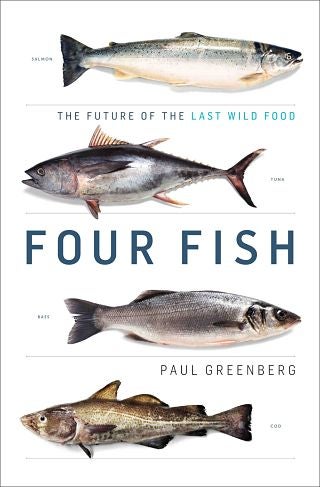 |
Cod are like proletarian masses, able to create strength in numbers. As redwoods came to dominate forests by limiting other trees鈥� access to sunlight, so cod 鈥渇orm a kind of predatory canopy over the continental shelves,鈥� keeping potential predators at bay by forming 鈥渕arauding hordes . . . that monopolized the most productive swaths of current.鈥�
Unlike many environmental books that overwhelm readers with dismaying news and then offer only a vague and unsatisfying prescription, Four Fish unfolds as an earnest quest for the right path forward. Ultimately, Greenberg concludes, we will have to rely on a mix of wild and farmed seafood鈥攂ut not just any mix. Wild populations of commercially caught fish must be managed according to specific goals, including the protection of forage fish (those now used as feed for aquaculture as well as for traditional farm animals) and the designation of at least one percent of the world鈥檚 oceans as 鈥渘o-catch areas.鈥�
As for farmed fish, the message is even simpler: some, but not others. 鈥淗umans should purposefully select a handful of fish species that can stand up to industrial-sized husbandry,鈥� Greenberg writes, 鈥渨ith the goal of compensating for the huge gap between wild supply and growing human demand.鈥� Farmed kahala, yes. Farmed bluefin tuna, no.