

La p谩gina que intenta visitar s贸lo est谩 disponible en ingl茅s. 隆Disculpa!
The page you are about to visit is currently only available in English. Sorry!

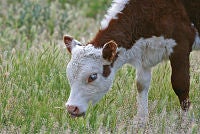 Could a shot help make your steak or hamburger safer? That鈥檚 what researchers are aiming to find out in a large-scale test to vaccinate cattle against a dangerous strain of E. coli called O157:H7. Researchers believe E. coli vaccines can slash the number of animals carrying the bacteria by 65 to 75 percent, The New York Times . While vaccines won鈥檛 wipe out the bacteria, it would reduce the amount of tainted beef. And there鈥檚 a definite need to increase safety when it comes to beef. But are vaccines the best way to go?
A quick refresher about O157:H7 (facts pulled from the ): When an E. coli outbreak hits the news, the culprit is typically O157:H7, an enterohemorrhagic E. coli. This strain lives in ruminants鈥� guts and the major source for human illnesses is cattle. Lucky for the cattle, O157:H7 doesn鈥檛 make them sick. But it can be deadly for us. Experts think there may be about 70,000 infections with O157:H7 each year in the U.S., and around 5鈥�10% of folks diagnosed with infection develop a potentially life-threatening complication known as hemolytic uremic syndrome; O157:H7 can also cause hemorrhagic colitis. Most people recover within a few weeks, but some suffer permanent damage and an estimated 60 people die each year.
Companies have been working on vaccines for nearly a decade, but bureaucratic red tape stalled tests until now. But, the Times : Even if the vaccines prove successful in the ambitious tests that are just getting under way, they face an uncertain future as farmers and feedlot owners worry about who will pick up the extra cost. 鈥淚 hope it works,鈥� Mr. Timmerman said. 鈥淚t probably won鈥檛 be so good for my pocketbook directly, but it鈥檒l probably be good for the industry.鈥�
It鈥檚 about time we took more drastic steps to better ensure that the meat we eat isn鈥檛 laden with dangerous bacteria, and vaccines will certainly help. But there鈥檚 something missing from the discussion鈥攚hy some cattle are ridden with O157:H7 in the first place.
Studies show that cattle that are fed grain鈥攗sually corn, a cheap source of food that fattens them up faster than grasses鈥攈ave higher populations of E. coli. Switching grain-fed cattle to a forage diet has been shown to cause E. coli populations to decline 1,000-fold with five days. The magnitude of E. coli reduction isn鈥檛 always that spectacular, USDA microbiologist Todd Callaway and colleagues when they looked at nine studies that investigated the effects of dietary manipulations on E. coli populations in cattle. For instance, switching from grain to hay caused smaller decreases. They concluded that the scientific data available indicate that switching cattle from grain to forage could potentially reduce enterohemorrhagic E. coli (like O157:H7) populations in cattle prior to slaughter. But, they stress, 鈥渢he economic impact of this needs to be examined.鈥�
Such efforts would undoubtedly be expensive, but isn鈥檛 protecting human health worth the cost?
(Photo by John O'Neill)