

La p谩gina que intenta visitar s贸lo est谩 disponible en ingl茅s. 隆Disculpa!
The page you are about to visit is currently only available in English. Sorry!

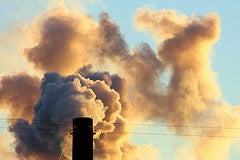 Photo: 漏hicagoenergy, Flickr Creative Commons |
The discussion over climate change legislation rolls on, with Senators John Kerry (MA-D) and Lindsey Graham (SC-R) presenting a timely in this past Saturday鈥檚 New York Times. Despite the mountain of rhetoric surrounding the issue, the phrase 鈥渃ap and trade鈥� has been decidedly鈥攁nd intentionally鈥攁bsent from the debate. Instead, Democrats have moved to 鈥減ollution reduction and investment鈥� or PRI.
According to the Associated Press, the idea was 碍别谤谤测鈥檚, to give cap and trade a makeover and refocus attention on what a climate change law could potentially accomplish. 碍别谤谤测鈥檚 been widely cited as saying that cap and trade 鈥渕eans nothing to people鈥� and that PRI 鈥渋s an actual description of what鈥檚 happening.鈥�
But does changing the language actually accomplish anything?
碍别谤谤测鈥檚 鈥攚hich he co-sponsored with California鈥檚 Barbara Boxer鈥攕till limits the amount of polluting gases that power plants, refineries and factories are allowed to emit (cap). And once these companies hit their max, they can still buy permits to meet the requirements (trade). 鈥淭he central element,鈥� Kerry and Graham wrote in The Times, 鈥渋s the establishment of a floor and a ceiling for the cost of emission allowances.鈥�
The phraseology shift could actually make a difference, according to non-profit . Its April 2009 report about how to best communicate environmental issues states, 鈥溾�楥ap and trade鈥� is unfamiliar to voters and support is relatively weak when voters are presented with a brief description.鈥� In surveys about what cap and trade should be called, 鈥渃lean energy dividend鈥� scored highest, followed by 鈥渃lean energy cash back,鈥� 鈥減ollution penalty,鈥� and 鈥減ollution reduction refund.鈥� 鈥淐ap and trade鈥� itself tested the worst.
Language shifts can help more than just 鈥渃ap and trade.鈥� Rather than 鈥済lobal warming鈥� or 鈥渃limate crisis,鈥� use the phrase 鈥渄eteriorating atmosphere,鈥� ecoAmerica suggests. Don鈥檛 debate weather (everyone has an explanation) and stay away from science or specific policies (many sides to scientific debates and policies prompt more questions and arguments than answers).
Though changing a phrase likely won鈥檛 ease the struggle Kerry, Boxer and their Senate counterparts face in getting the 60 votes needed to pass this legislation, it could potentially change the temperature of the discourse. And that, at least, is a start.