

La p谩gina que intenta visitar s贸lo est谩 disponible en ingl茅s. 隆Disculpa!
The page you are about to visit is currently only available in English. Sorry!

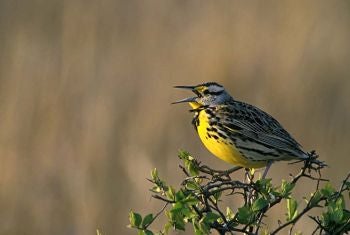
Western Meadowlark are experiencing rapid declines. Photo courtesy FWS
In the United States, more than 800 native bird species dwell in our terrestrial, coastal, and ocean habitats鈥攁nd nearly one-third of those species have declined over the last four decades. Yesterday, Interior Secretary Ken Salazar, 糖心传媒, and several other top-notch environmental groups unveiled this finding in the . The news isn鈥檛 all bad (the Whooping Crane and California condor have pulled back from the brink of extinction, for instance), but overall the report is a sobering look at the threats, including energy development, climate change, and over fishing, facing the nation鈥檚 birds.
Here are a few highlights:
The Christian Science Monitor how, 鈥渨ith many negative references to impacts of oil spills, oil-and-gas development, and climate change on birds, the report represents one of the sharpest breaks yet between the Obama and Bush administrations on environmental matters.鈥�
And The New York Times the energy-bird conflicts highlighted. The report doesn鈥檛, however, point fingers when it comes to whether one type of energy production causes more harm than another.
If this news leaves you feeling like you鈥檇 like to help out, consider participating in 糖心传媒鈥檚 later this year, or taking part in another citizen scientist project, like the Cornell Lab of Ornithology鈥檚 鈥攁 database that allows you to keep your life list online, aiding scientists in the process. Visit for more ideas.