

La p谩gina que intenta visitar s贸lo est谩 disponible en ingl茅s. 隆Disculpa!
The page you are about to visit is currently only available in English. Sorry!

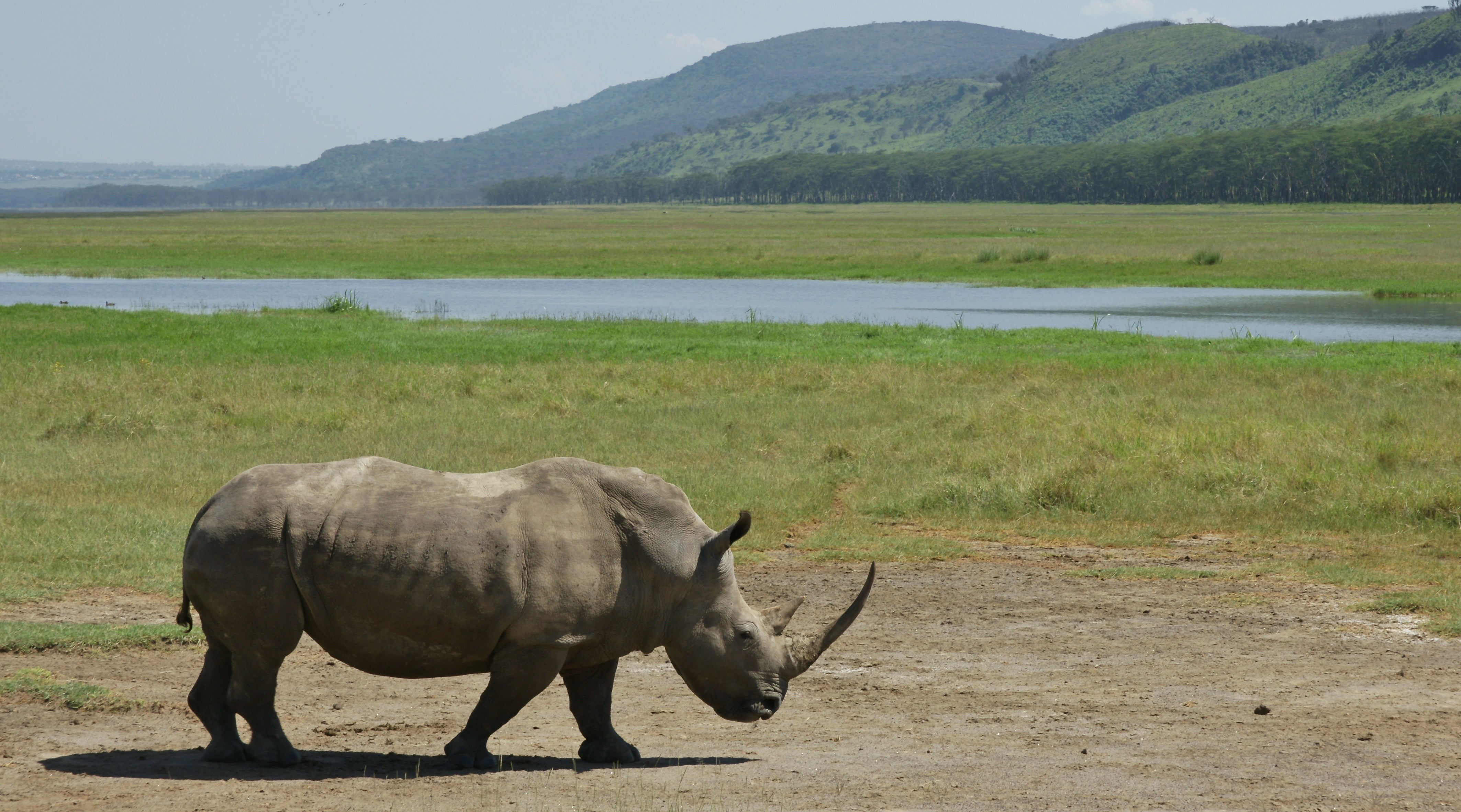
A rhino in Tanzania. (Photo by / )
Animal trafficking鈥攁 $10 billion annual trade鈥攈as received elevated attention in recent years, as a spate of poaching has been unleashed on rhinoceroses and elephants. Rhino horn, which costs more per gram than gold and cocaine, is believed in parts of Asia to cure an assortment of ailments. And tusks, which sell for $1,000 a pound, are used for making trinkets and filigreed ornaments.
The United States is stepping up its efforts to help combat the devastating trade, which is driving down populations of already threatened species sharply. President Obama unveiled an initiative to tackle the lucrative illegal trade in wildlife and wildlife parts last week, during his African trip that culminated in Tanzania.
鈥淧oaching and trafficking is threatening Africa鈥檚 wildlife, so today I issued a new executive order to better organize U.S. government efforts in this fight so that we can cooperate further with the Tanzanian government and others,鈥� Obama said in a . 鈥淭he entire world has a stake in making sure that we preserve Africa鈥檚 beauty for future generations.鈥�
The order establishes a Presidential Task Force on Wildlife Trafficking that will be responsible for drawing up a strategy to combat poaching in targeted African countries.
In addition to the task force, Obama has dedicated $10 million to directly fund technical assistance and training for rangers and others fighting the battle against poaching on the ground, the explains. Of those funds, $6 million will be split between South Africa and Kenya, and the remaining $4 million spread across the rest of sub-Saharan Africa, reports.
The trade in wildlife extends beyond animal parts too, to the transport of live, wild animals sold as pets. Globally, bear a large brunt on account of their bright feathers and 鈥榚ntertaining鈥� songs, an from the Cornell Lab of Ornithology points out. Reptiles, mammals, and plants are also in high demand.
Despite the global nature of this threat, for now, Obama鈥檚 support is leveled at African nations because the poaching crisis there is seen to be out of control. Hunting elephants has become a large-scale, militarized affair in some parts of the continent like the , as corrupt political forces of the incredibly lucrative trade.
And in 2012 alone, African rhino were poached for their horns. Conservationists, increasingly desperate to thwart poachers鈥� efforts, are turning to methods like rhino horn. They鈥檝e also recently started ivory items to pinpoint illegal sources (ivory traded after the 1989 ban). The approach is helping authorities to focus their tracking resources most efficiently.
鈥淚n the last few years, wildlife trafficking has really exploded in terms of scale and also in terms of the types of poachers and organized crime networks that are involved in this activity,鈥� said Grant Harris, senior director for African Affairs at the National Security Staff, in a government .
Conservationists have lauded Obama鈥檚 move, with some pointing out that while $10 million might not sound like a lot, it could make a difference.
鈥淚n combating wildlife crime鈥ou can talk about investments in the millions and tens of millions (of dollars) and you can achieve a lot,鈥� said John Scanlon, the secretary-general for the Convention on International Trade in Endangered Species of Wild Fauna and Flora (CITES), to . 鈥淚t鈥檚 not like if you鈥檙e talking about combating climate change, where you鈥檙e talking about multiple billions.鈥�
Related Stories
By Dan Drollette, Jr.
By Ted O鈥機allahan
By Alisa Opar
By Justine Hausheer
By Kate Yandell