

La p谩gina que intenta visitar s贸lo est谩 disponible en ingl茅s. 隆Disculpa!
The page you are about to visit is currently only available in English. Sorry!

|
Photo by |
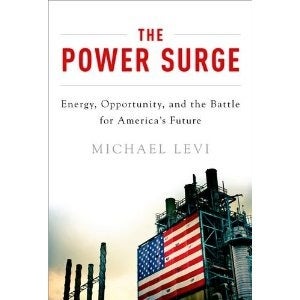
By Michael Levi
Oxford University Press, 304 pages, $27.95
America is at an energy crossroads, says Michael Levi, energy expert and member of the Council on Foreign Relations think tank. According to Levi, we are experiencing an energy-related climate crisis鈥攇lobal warming鈥攊n addition to localized environmental problems created by fossil fuels. Think the earthquake in Youngstown, Ohio, caused by a shale gas well drilled too close to a fault line.
We are also experiencing two energy revolutions, Levi writes. The past decade has seen an oil and natural gas boom: estimated in 2011 that if no policies change, the United States will produce 26.32 trillion cubic feet of natural gas annually by 2035 compared with 24.04 trillion cubic feet produced every day in 2010. A Citigroup analysis revealed that by the end of the decade, shale rock could yield 4 billion barrels of oil a day. In addition, we鈥檙e seeing great growth in renewable energy, which in 2010 provided 48 gigawatts of our power鈥攎ore than three times the predicted amount鈥攁nd is still growing.
With The Power Surge, Levi aims to help Americans understand every intricacy of this country鈥檚 energy scene, from energy independence to its economic significance to the environmental impact of oil, coal, natural gas, and renewable energy. The book is very detailed. It provides historical background to give the subject matter context, for example, a brief history of the nation鈥檚 energy conflicts, including the Arab oil crisis, and the conflicts around hydraulic fracturing, also called fracking. Levi also intersperses fact with anecdote about everything from towns affected by the current oil boom to the experience of driving the fuel-efficient Ford Mustang.
The Power Surge concludes with a unique blueprint for a smart energy future: Levi does not support one energy technology over another but rather advocates using a mix. This approach, he says, will maximize benefit and minimize damage to the environment, the economy, and America鈥檚 national security. In his eyes, none takes precedence over the other two.
Levi鈥檚 final message is this: 鈥淣o one energy source is a panacea for the economic, security, and environmental challenges the United States faces.鈥� Instead, we need to take a myriad of approaches. For anyone interested in energy, no matter his or her knowledge level, this is a book worth reading.